Before coming to Thailand, pretty much everything I knew about the country came from other people’s social media: night markets, packed beaches, traffic, high-rises the whole picture. That’s genuinely what I expected when I landed.
A lot of that expectation has been chipped away since, but nothing did more damage to it than two days in Chiang Rai with the Jasberry team.
I went up thinking it would be a work trip.
I came back having seen a completely different side of the country.
We flew up on a Thursday morning, a group of three, on a flight so quick we’d basically just sat down before we were landing.
The second we stepped off the plane, there was already a difference you could feel.
More trees. More green.
The whole place felt more alive than anywhere else I’d been in Thailand.
After a bowl of khao soi at a resort by the river, we headed out to meet the farmers.
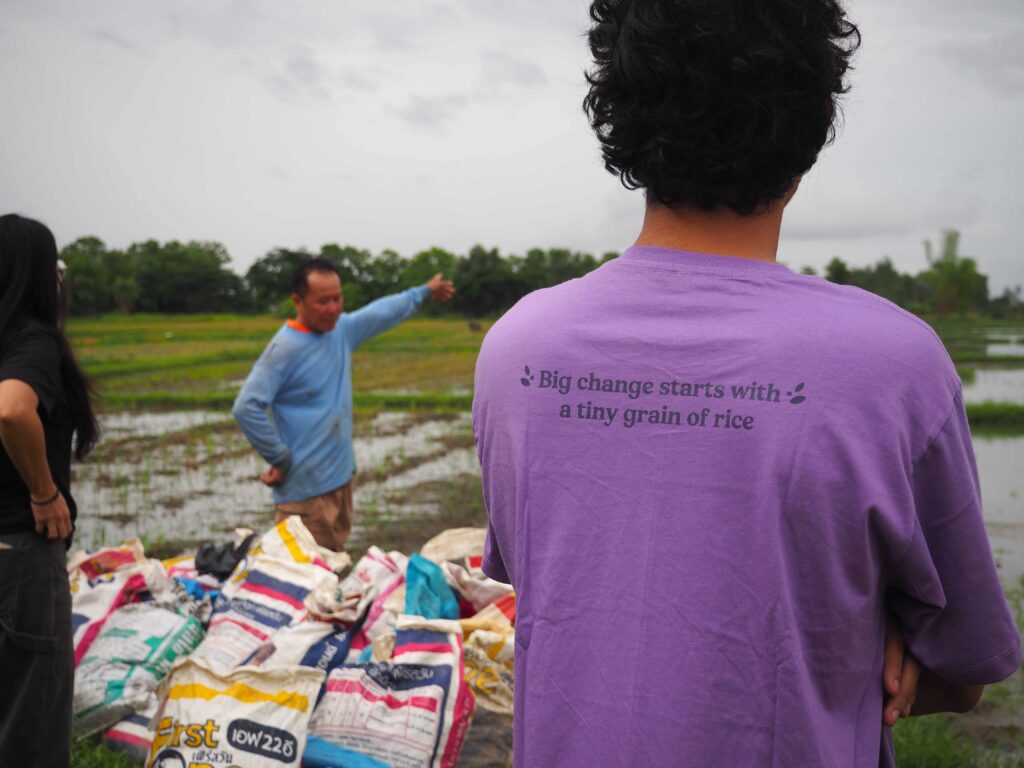
The actual purpose of the trip was to host a training session with researchers from Rice Science Centre, Kasetsart University, who had come to teach farmers about regenerative farming.
The farmers have basically been doing something close to regenerative farming this whole time through instinct and experience, but there is a layer of science on top that can help fix the small stuff.
Watching that exchange happen, outside in 35-degree heat that somehow wasn’t as bad as it sounds, was the first moment that really stuck with me.
Once the session ended, we got the cameras out and started interviewing people.
Partly because we needed content for social media, but mostly because we were curious ourselves.
We talked to researchers about the science behind the rice.
We talked to farmers about what the work had actually been like over the years.
We talked to the field team about what their day-to-day looked like.
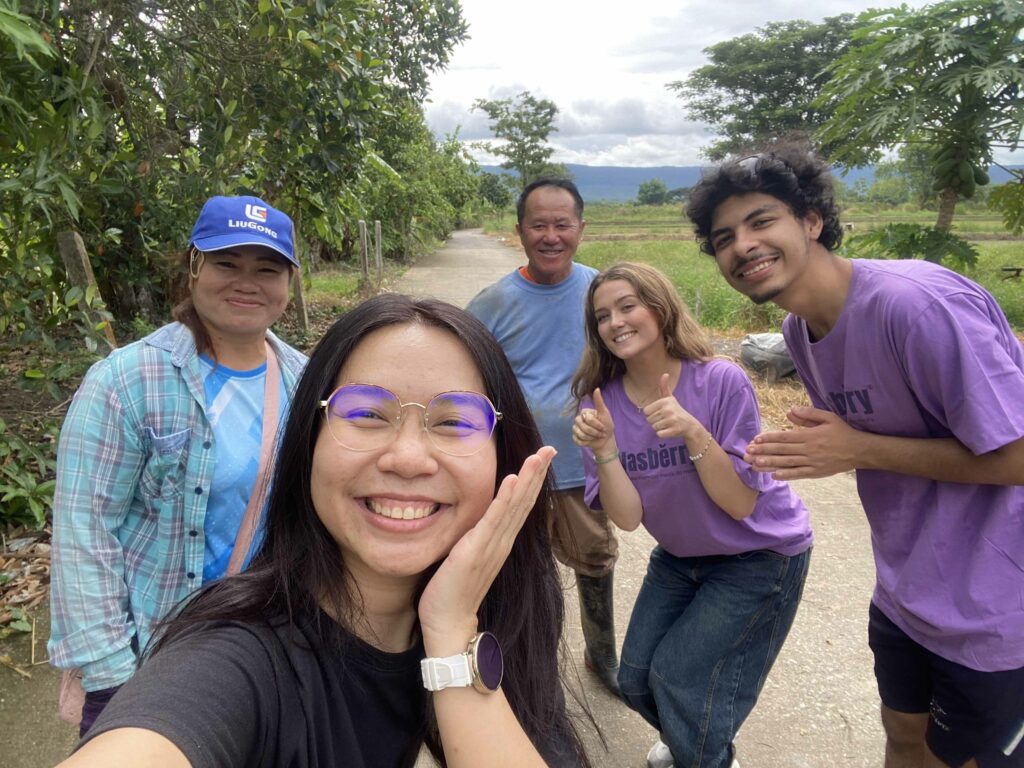
There was a language barrier the whole time, but our boss and translator, Nhon, carried basically every conversation, and none of it would have worked without her.
One thing I wasn’t expecting was how welcoming everyone was.
At one of the farms, a woman hugged us before she even knew either of our names.
All she’d been told was that some interns were coming.
She still greeted us like we were already family.
I’m an economics major, and I want to end up in finance, so nothing about my degree was ever going to point me toward farmers’ fields in Chiang Rai.
No one with my major comes here.
But sitting there listening to everyone talk about their work, I felt happier and more present than I have in a while.
We checked into our Airbnb around five, rested for a bit, and went out to explore the city.
We ended up eating more dishes than I could name, and one of them—pad pongali—just did not sit right with me.
I still have no idea what I’m allergic to, but my throat and tongue figured it out almost immediately.
Even though I wanted to keep exploring and trying more food, I had to head back and lie down.
My First Time Planting Rice
I woke up the next day completely fine, which was a relief because the plan was to actually plant rice—something I had never done before.
The second I stepped into the field and felt myself sink into the mud, it was game on.
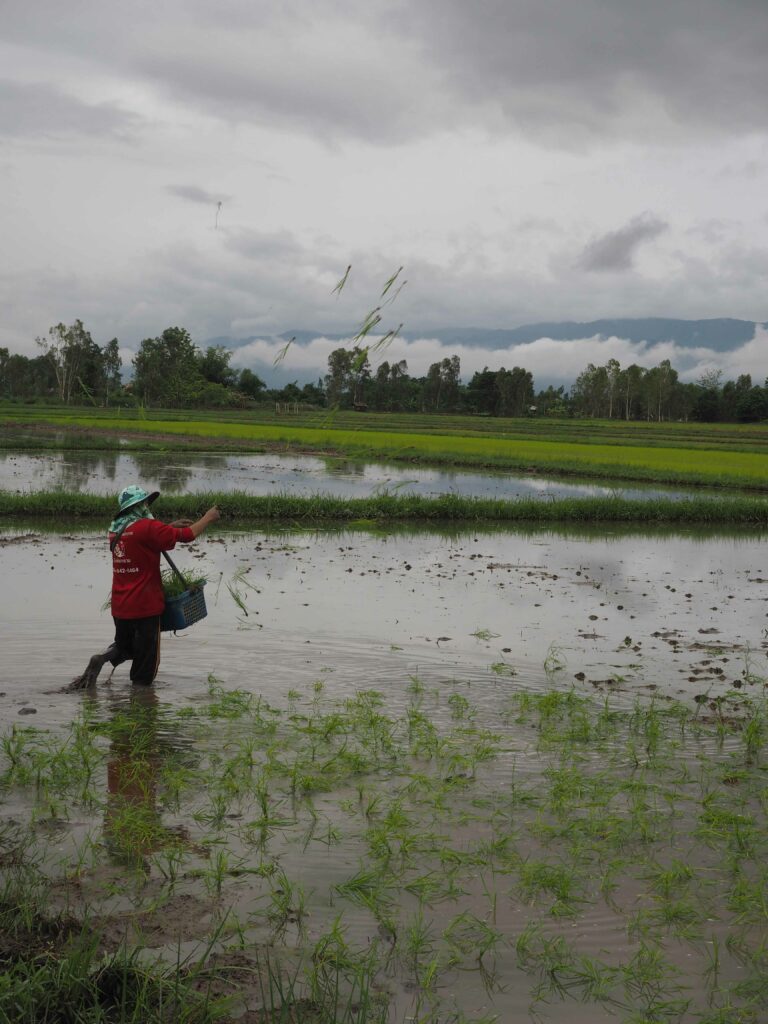
The farmers showed me how to throw the baby rice plants properly.
It’s called parachute planting.
Instead of placing the seedlings by hand, you literally throw them.
A bad throw means extra work later, so naturally I was worried I was making everyone’s job harder.
I knelt in the mud and started throwing.
Every time one landed, a farmer would call out,
“Good!”
I don’t think most of them were actually good.
I think he just wanted me to feel like they were.
After about thirty muddy minutes of that—covered in mud, laughing, and taking photos—I started to understand why people talk about planting rice like it’s some kind of core memory.
After that, we stopped by the rice mill on our way to visit more farmers.
The coordinator there talked us through organic demand, supply, and how surprisingly difficult it can be to market the word “organic” to people who don’t fully understand what it means.
Then we made one last farm visit before getting dropped off at the bus park for the three-hour ride to Chiang Mai, where a whole different story started that I’m keeping to myself for now.
What I thought would be a quick work trip ended up changing the way I see Thailand.
The version of Thailand that gets posted online is real.
But it’s only one version of the country.
The Thailand I saw in Chiang Rai was slower, greener, and full of people whose work rarely makes it onto anyone’s feed, despite being the reason so much of the country runs in the first place.
The weird part is that none of this is something I would have ever planned for myself.
If you’d asked me a year ago where I’d be spending my summer, standing in a rice field in northern Thailand while farmers laughed at my planting technique would not have made the list.
But those are the moments I keep thinking about.
Not the flights.
Not the city.
Not even the work itself.
Just the conversations.
The people.
And the feeling that, for two days, I got to see a version of Thailand that most visitors never really get to see.
For something that lasted less than forty-eight hours, it stuck with me a lot longer than I expected.
And that alone made the trip worth it.